Finding a dependable recycling company in Dubai is no longer just a facility management task; it is a core governance responsibility. As the UAE expands its circular economy frameworks and municipal oversight intensifies in 2026, companies operating in commercial, logistics, retail, and industrial sectors face stricter expectations regarding operational footprint and material documentation. This guide walks through exactly what Ecocleaner, and any credible recycling company in Dubai, should be able to demonstrate.
Selecting the wrong partner exposes an organization to regulatory fines, operational disruptions, and severe reputational damage if branded inventory or proprietary materials resurface on secondary markets. For procurement, compliance, and ESG leaders, vetting prospective partners requires objective criteria rather than marketing claims.
1. Why Partner Selection Directly Impacts Corporate Risk
Corporate material disposal carries significant legal and operational exposure:
- Regulatory Compliance: Dubai’s regulatory framework mandates proper segregation, approved transfer protocols, and traceable end-of-life processing. Handing materials to an unverified entity can leave your enterprise legally liable for illegal dumping or improper disposal.
- ESG Reporting Integrity: Scope 3 emissions, corporate sustainability metrics, and circularity goals demand verifiable data. Unsubstantiated estimates or vague collection logs will not withstand third-party audit scrutiny.
- Brand & IP Protection: Obsolete inventory, uniform stock, excess branded packaging, or recalled assets must be permanently retired. Mishandled disposal can lead to counterfeit redistribution or unauthorized resale, eroding brand equity overnight.
2. Verify Dubai Municipality Approval as the Non-Negotiable Baseline
When evaluating providers, checking for Dubai Municipality approved recycling companies is the first operational threshold.
Approval by Dubai Municipality (DM) indicates that the provider operates in verified compliance with local environmental standards, possesses proper trade licensing for specific material streams, and complies with municipal waste tracking and transport regulations.
Working with an unapproved vendor breaks the legal chain of custody. If a vendor cannot produce valid Dubai Municipality permits matching the exact material handling activities they offer, conversations should stop immediately.
3. Require Documented, Job-Specific Destruction and Recycling Certificates
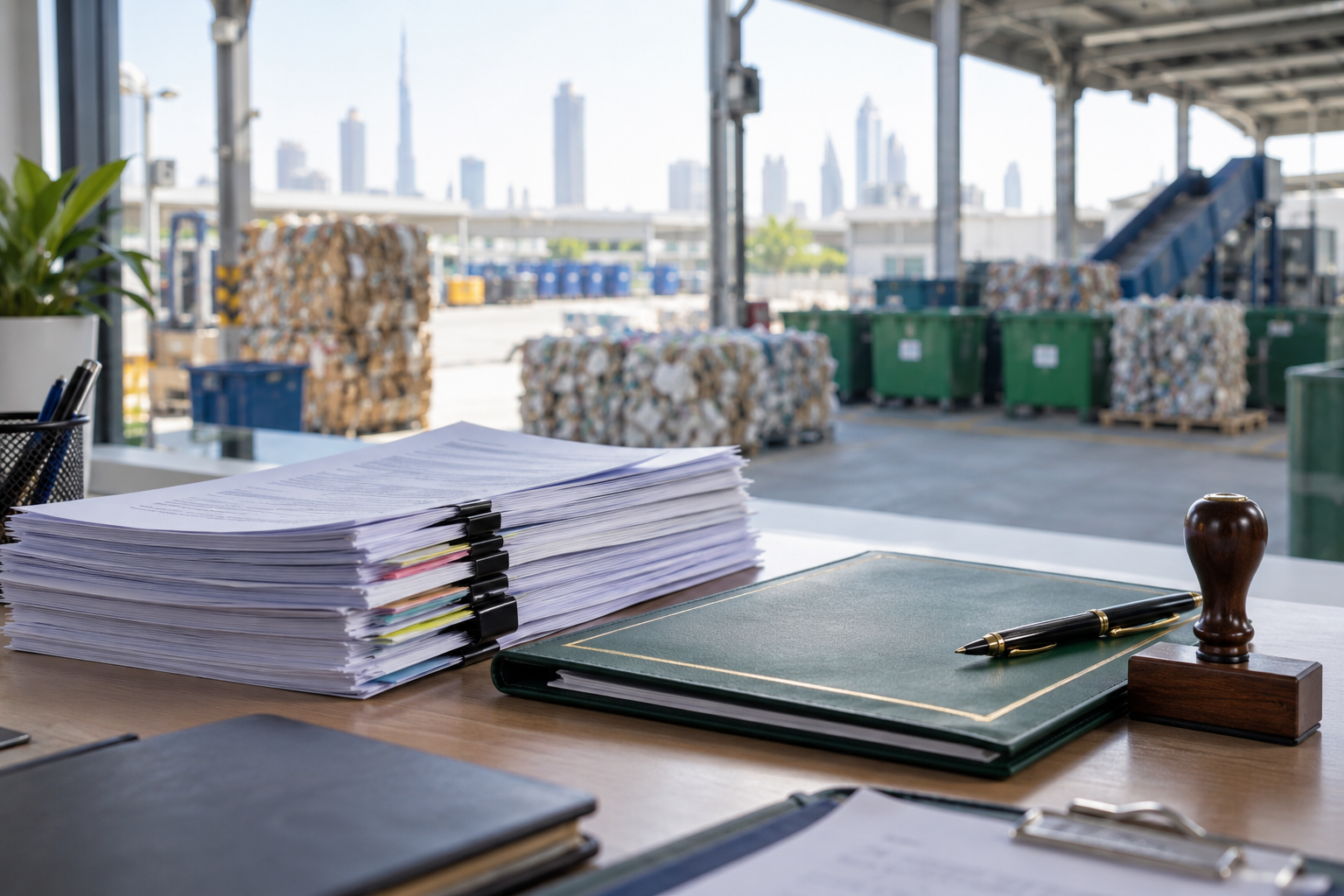
Verbal assurances that goods have been “handled responsibly” provide zero legal standing during a corporate audit. Reliable partners supply documented proof per collection. Ecocleaner issues an official certificate of recycling or destruction for every collection, and any credible provider should do the same.
- Official Certificates: Every collection should conclude with an official certificate of recycling or certificate of destruction detailing date, collection reference, material category, and net volume or weight.
- Tamper-Evident Paperwork: These records form the documentary backbone required by internal compliance teams, external ESG auditors, and municipal inspectors.
- Traceable Documentation: If your firm requires high-security asset retirement or brand-sensitive disposal, ensure the provider provides documented confirmation of permanent physical transformation.
4. Confirm Material Scope and Genuinely Active Streams
Many commercial operations generate complex, mixed waste profiles. Partnering with a provider that only handles a single narrow commodity often forces procurement teams to manage fragmented vendor relationships.
Verify that your provider actively handles the specific streams generated by your facilities:
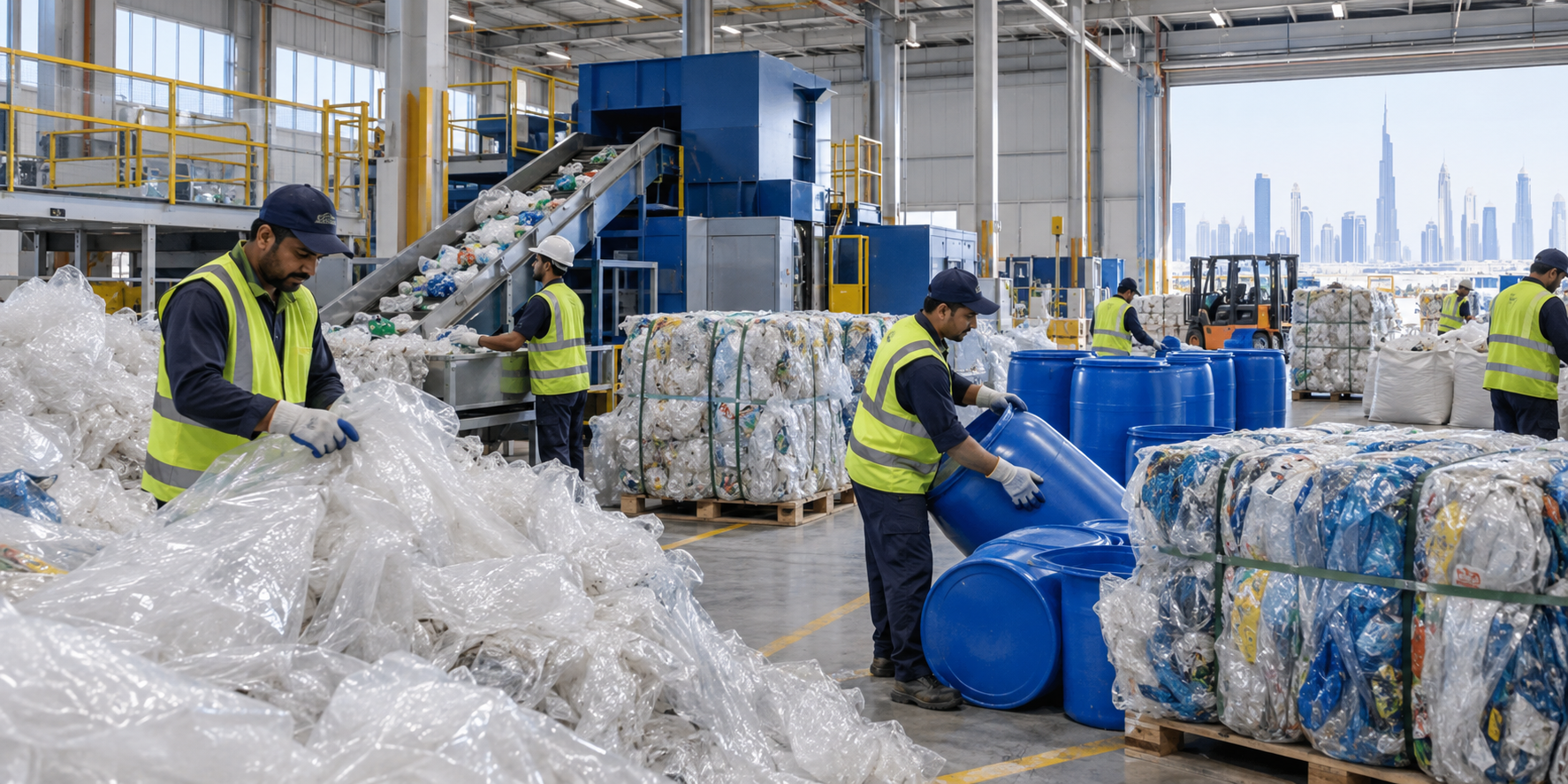
- Plastics: Rigid packaging, films, drums, production offcuts, and strapping materials (including standard polyester/PET and composite strap).
- Paper & Cardboard: Secondary packaging, corrugated cartons, archives, and office paper.
- Glass: Commercial bottles, containers, and flat glass offcuts.
- Textiles: Discontinued stock, uniforms, and fabric offcuts.
- Metals: Ferrous and non-ferrous production scrap, structural metal, and facility offcuts.
- Electronic Waste (E-Waste): IT assets, obsolete hardware, peripherals, and electrical components.
- Secure Product Destruction: Controlled decommissioning of obsolete branded stock, uniform assets, and sensitive packaging.
Ensure the recycling partner’s operational license covers your specific material mix.
5. Review Material Chain of Custody and ESG Reporting
A reliable provider must offer clear visibility into how materials move from your loading dock to final processing. At Ecocleaner, this is exactly the kind of visibility we build into every client relationship:
| Evaluation Area | Key Criteria to Validate |
|---|---|
| Collection & Logistics | Scheduled pickups, suitable transport containers, and clear handover manifests at your site. |
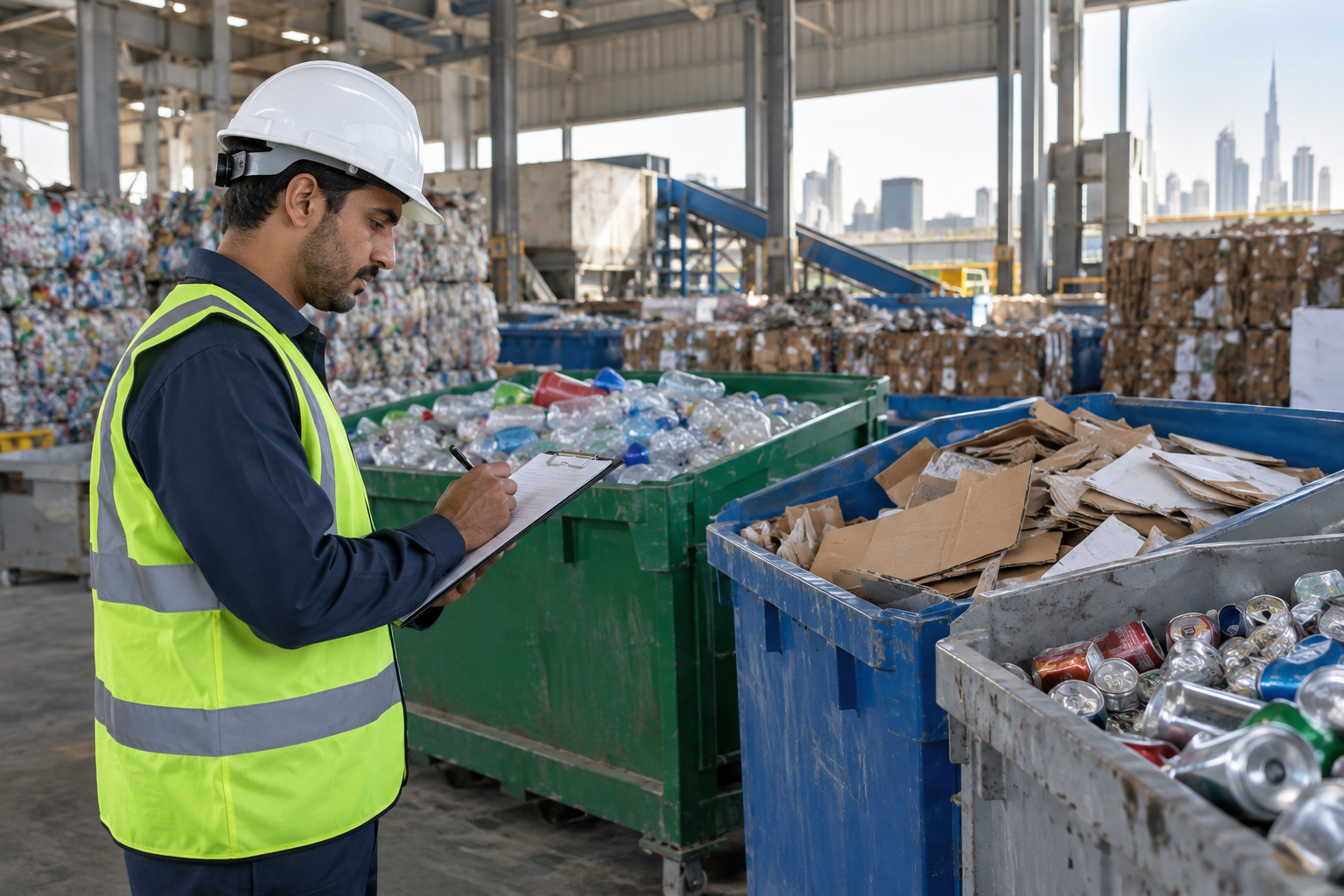
| Material Verification | Transparent weight verification processes and sorting protocols. |
| Traceability | Documented custody transfer confirming that goods enter authorized recovery channels. |
| ESG & Sustainability Reporting | Provision of auditable diversion metrics and recovery summaries to support corporate sustainability disclosures. |
Because each facility’s operational flow differs, avoid providers offering rigid, one-size-fits-all processes. The best way to evaluate operational fit is through an on-site material assessment where handling, staging, and reporting requirements can be tailored directly to your facility.
6. Evaluate Proven Track Record and UAE Operating Experience
A provider’s longevity and client base reflect their ability to navigate evolving municipal regulations and sustain dependable logistics schedules.
When evaluating service history:
- Look for demonstrated multi-year operations handling commercial and industrial volume within Dubai.
- Ask about the scale and profile of enterprises served across logistics hubs, manufacturing districts, and corporate centers.
Ecocleaner demonstrates this operational resilience, bringing 10+ years of operational experience in the UAE and serving over 50 enterprise clients. This local track record ensures institutional familiarity with UAE regulatory expectations and corporate audit frameworks.
The Procurement & Compliance Checklist (How Ecocleaner Measures Up)
Use this quick checklist during vendor evaluations:
- Valid Dubai Municipality approval documents verified for active material categories
- Formal, job-specific recycling and destruction certificates issued for every collection
- Full alignment between your facility’s waste streams and the vendor’s active material licenses
- Established chain-of-custody documentation from collection to recovery
- Structured reporting provided to substantiate internal ESG, waste-diversion, or compliance audits
- Proven operating history and demonstrable enterprise client track record in the UAE
Request a Commercial Recycling Assessment
Evaluating your facility’s material streams and compliance framework is the simplest way to reduce waste liabilities and improve diversion rates.
Contact Ecocleaner today to schedule a comprehensive, on-site recycling assessment with our compliance specialists, or request an evaluation of your current material handling processes.