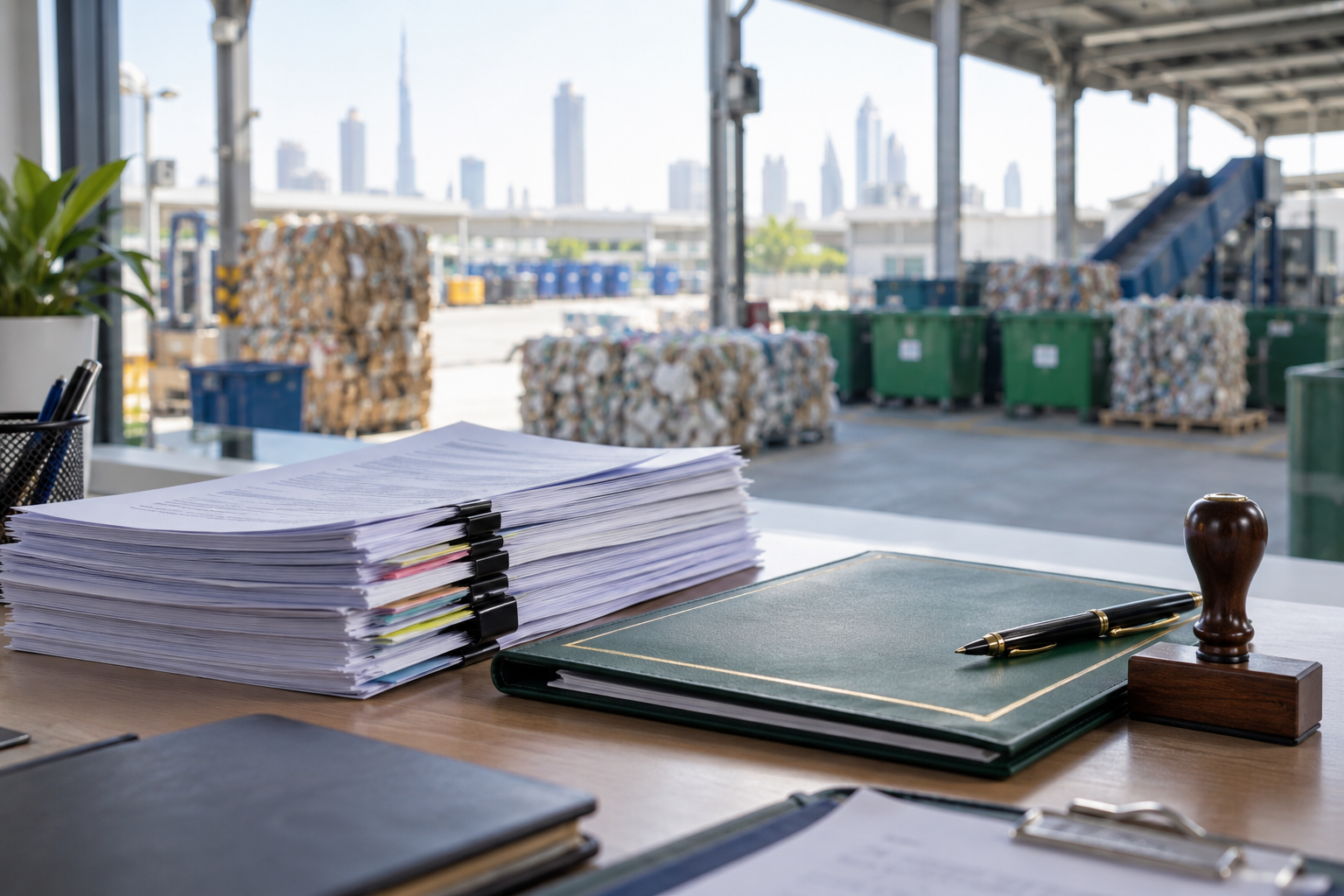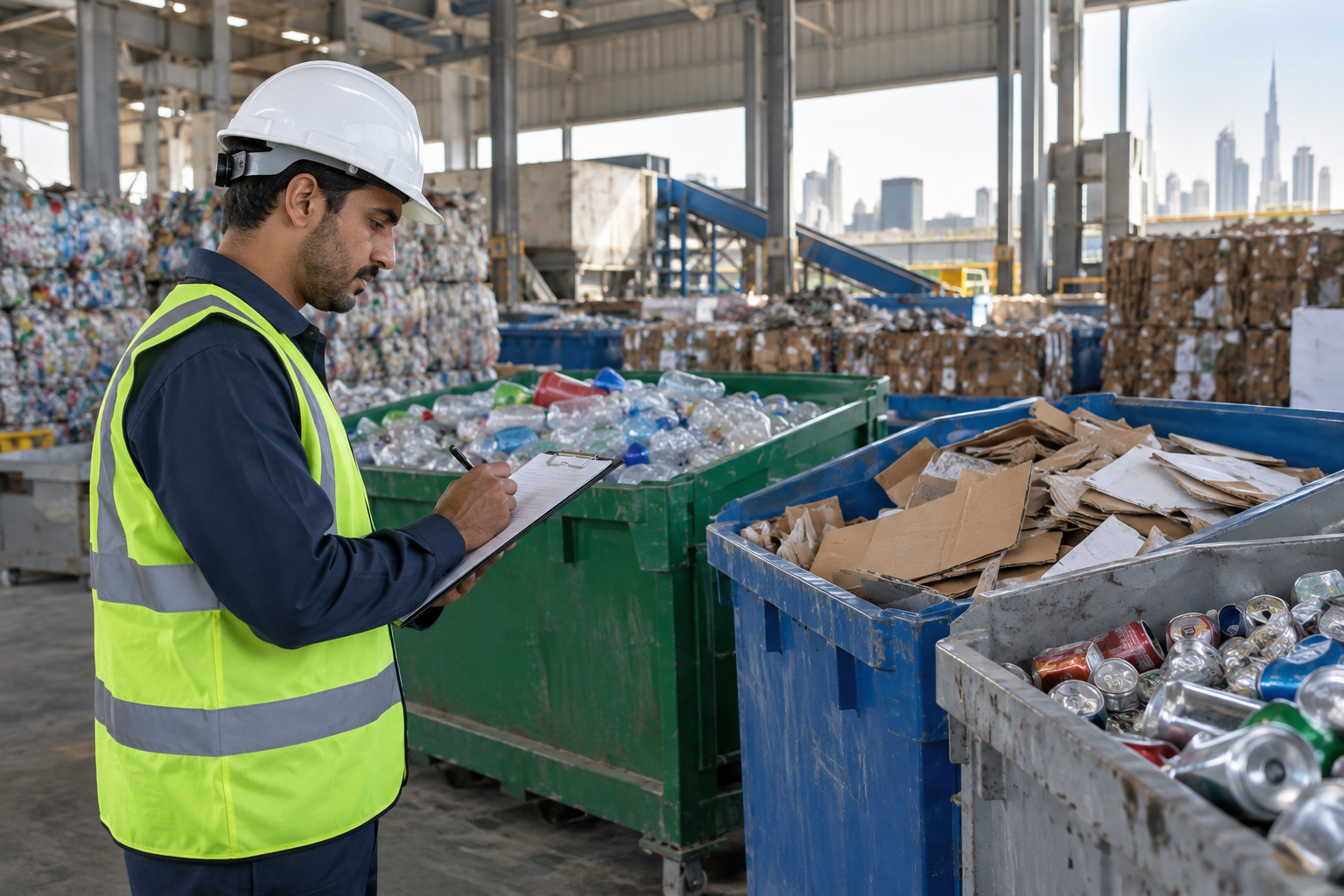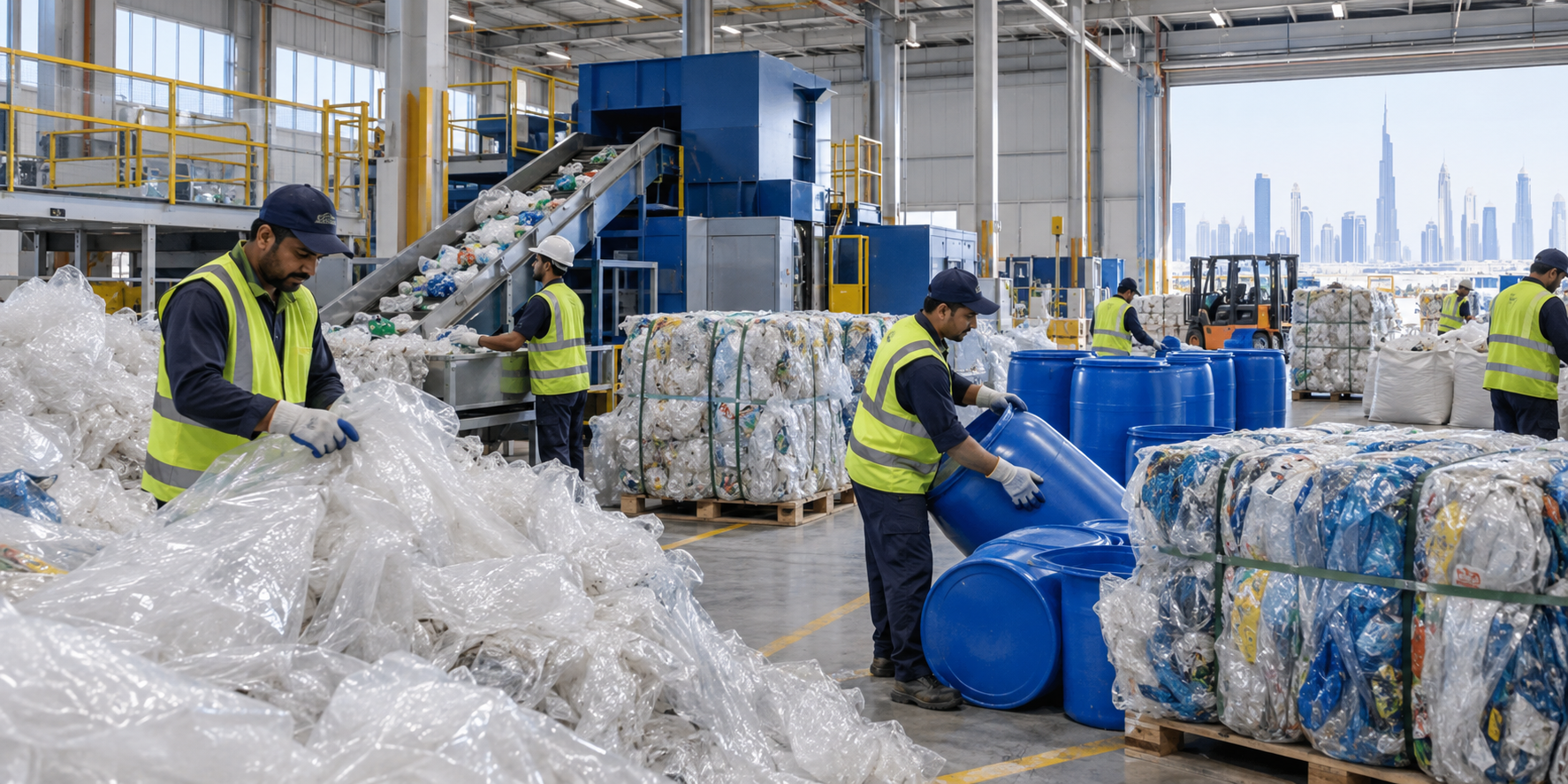
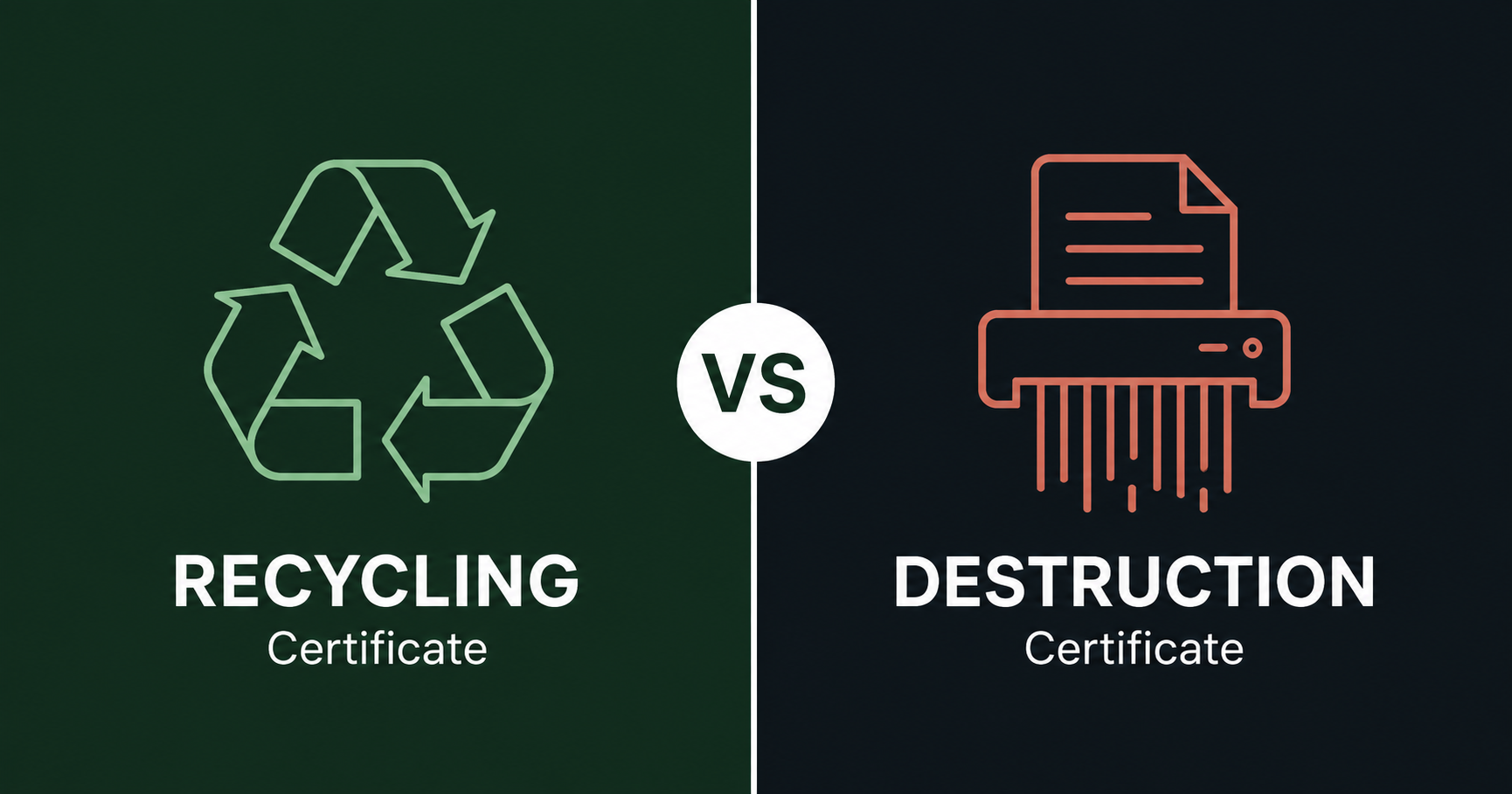
When contracting an environmental services or waste management partner in the UAE, obtaining proper documentation is a critical step for corporate governance. However, many business owners, compliance officers, and procurement managers assume that any generic receipt or handover document fulfills their legal and operational requirements. In practice, receiving the wrong type of waste disposal certificate in Dubai can create significant compliance gaps during internal audits, environmental assessments, or regulatory reviews. A recycling certificate and a destruction certificate serve entirely different legal, environmental, and operational purposes. Confusing or interchanging the two can leave your organization vulnerable to data exposure, brand liability, or non-compliance penalties. Understanding which document your operations require ensures your business maintains transparent, defensible, and audit-ready records.
What Is a Recycling Certificate?
A Recycling Certificate (often referred to as a Certificate of Recycling) confirms that collected materials were processed through authorized recovery streams rather than discarded in municipal landfills. It serves primarily as environmental and sustainability documentation.
This certificate verifies that products, packaging, scrap materials, or decommissioned assets were sorted, dismantled, and repurposed into secondary raw materials. A standard recycling certificate typically documents:
- Material Classification: Specific categories of recovered waste, such as paper, cardboard, plastics, ferrous and non-ferrous metals, or electronic components.
- Weight and Volume: The exact mass or unit count of materials diverted from landfills.
- Date and Facility Location: The timestamp and processing facility where the materials were received and recycled.
- Processing Method: The material recovery or mechanical recycling procedures utilized.
For organizations tracking corporate sustainability metrics, waste diversion goals, or annual environmental reports, this document provides the necessary verification.
What Is a Destruction Certificate?
A Destruction Certificate (or Certificate of Destruction) serves an entirely different function. It provides formal, legally binding verification that specific items, proprietary goods, or sensitive media have been permanently, irreversibly rendered unusable before any subsequent downstream handling occurs.
This document is essential for managing liability surrounding confidential business records, expired commercial stock, recalled products, counterfeit merchandise, branded assets, or data-bearing electronic media such as hard drives and servers. A valid destruction certificate typically details:
- Itemized Inventory: A detailed breakdown of the destroyed items, including serial numbers, batch identifiers, or asset tags.
- Destruction Methodology: The specific physical process used, such as industrial shredding, crushing, degaussing, or shearing.
- Timestamp and Witness Details: The precise date, time, and authorized personnel overseeing the destruction.
- Chain of Custody Verification: Documentation confirming continuous custody from collection through to physical destruction.
Why the Distinction Matters for Your Business
Using the wrong document can have serious operational and regulatory consequences:
- Data Privacy and Brand Protection: If your organization disposes of confidential paperwork, proprietary prototypes, or obsolete servers, a general recycling certificate only proves the raw materials were processed. It does not certify that the data was sanitized or that branded goods were prevented from re-entering secondary markets. For liability mitigation, a destruction certificate is required.
- ESG and Sustainability Reporting: Conversely, if your objective is to demonstrate compliance with environmental standards and quantify landfill diversion, a destruction certificate alone does not detail material recovery or environmental impact.
- Dual-Requirement Workflows: Many commercial scenarios require both certificates. For instance, when retiring data center hardware, the hard drives must first undergo certified physical destruction (requiring a destruction certificate), after which the metal and plastic remnants are processed for material recovery (requiring a recycling certificate).
What to Look for in a Valid Waste Disposal Certificate in Dubai
When evaluating vendors for waste management, shredding, or asset disposal, ensure their documentation meets standard compliance benchmarks:
- Issued by an Approved Provider: The documentation should be issued by a recognized, Dubai Municipality-approved recycling and waste management facility.
- Granular, Traceable Data: Avoid generic, single-line receipts. A valid waste disposal certificate in Dubai should explicitly state dates, quantities, asset descriptions, and handling methods.
- Audit-Ready Chain of Custody: The documentation should reflect secure logistics, tracking the assets from collection at your premises to final processing.
- Standard Operating Procedure: Your vendor should provide standardized certificates as an automatic deliverable for every completed job, rather than treating them as an optional request.
Secure Documentation and Compliance with Ecocleaner
Maintaining clear, defensible records protects your brand, fulfills corporate governance standards, and ensures compliance with local waste handling protocols. Based in Dubai Industrial City, Ecocleaner Recycling LLC is a Dubai Municipality-approved recycling and secure destruction company providing transparent, end-to-end services for commercial clients across the UAE.
Whether your facility requires certified industrial product destruction, confidential document shredding, or sustainable material recovery, Ecocleaner issues formal Recycling Certificates and Destruction Certificates tailored to your exact operational requirements. Contact our compliance and disposal team today to discuss your organization’s waste management and secure destruction needs.