For corporate enterprises, financial institutions, and commercial organizations across the UAE, retiring outdated IT infrastructure is an inevitable operational milestone. However, discarding obsolete electronics alongside general commercial waste introduces significant legal, financial, and environmental liabilities. Electronic waste contains hazardous substances such as lead, mercury, and cadmium, alongside sensitive corporate and customer data stored on internal drives. In Dubai, commercial waste disposal is strictly governed by local municipal authorities, meaning that unverified or informal disposal methods can expose companies to regulatory penalties, legal liabilities, and severe data breach risks. Understanding the established framework for e-waste recycling in Dubai is therefore not merely a matter of environmental stewardship; it is an essential corporate governance and compliance obligation for every modern organization operating in the emirate.
Looking for certified commercial electronic recycling or bulk e-waste collection?
Explore Our E-Waste & Recycling Services →Why E-Waste Disposal Rules Matter in Dubai
Managing electronic waste responsibly in the UAE requires strict adherence to local environmental standards and data privacy principles. Dubai Municipality enforces comprehensive regulatory frameworks governing commercial, industrial, and hazardous waste streams to prevent toxic contamination across municipal landfills and surrounding ecosystems. When electronic equipment is dumped improperly, heavy metals and chemical compounds can leach into soil and groundwater, resulting in long-term environmental degradation.
Beyond environmental hazards, improper electronic disposal poses a critical threat to corporate information security. Decommissioned desktop workstations, employee laptops, multi-function printers, and network servers routinely house proprietary records, intellectual property, financial databases, and confidential customer information. Standard formatting or file deletion does not permanently erase data; without documented physical destruction or certified data sanitization, discarded storage media remains vulnerable to unauthorized extraction. By observing regulated disposal protocols, organizations protect their brand reputation, avoid costly regulatory sanctions, and eliminate data exposure risks.
What Counts as E-Waste?
Electronic waste encompasses any end-of-life electrical or electronic equipment, whether functional, repairable, or completely obsolete. In commercial and office environments, e-waste typically falls into several key categories:
- Computing and Office Hardware: Desktop PCs, workstations, laptops, monitors, docking stations, keyboards, mice, and commercial multi-function printers.
- Enterprise and Networking Equipment: Rack-mounted servers, routers, network switches, firewalls, uninterruptible power supplies (UPS), and telecom systems.
- Mobile and Communication Devices: Smartphones, tablets, VoIP desk phones, landline systems, and wireless accessories.
- Digital Storage Media: Internal and external hard disk drives (HDDs), solid-state drives (SSDs), magnetic backup tapes, optical discs, and USB storage units.
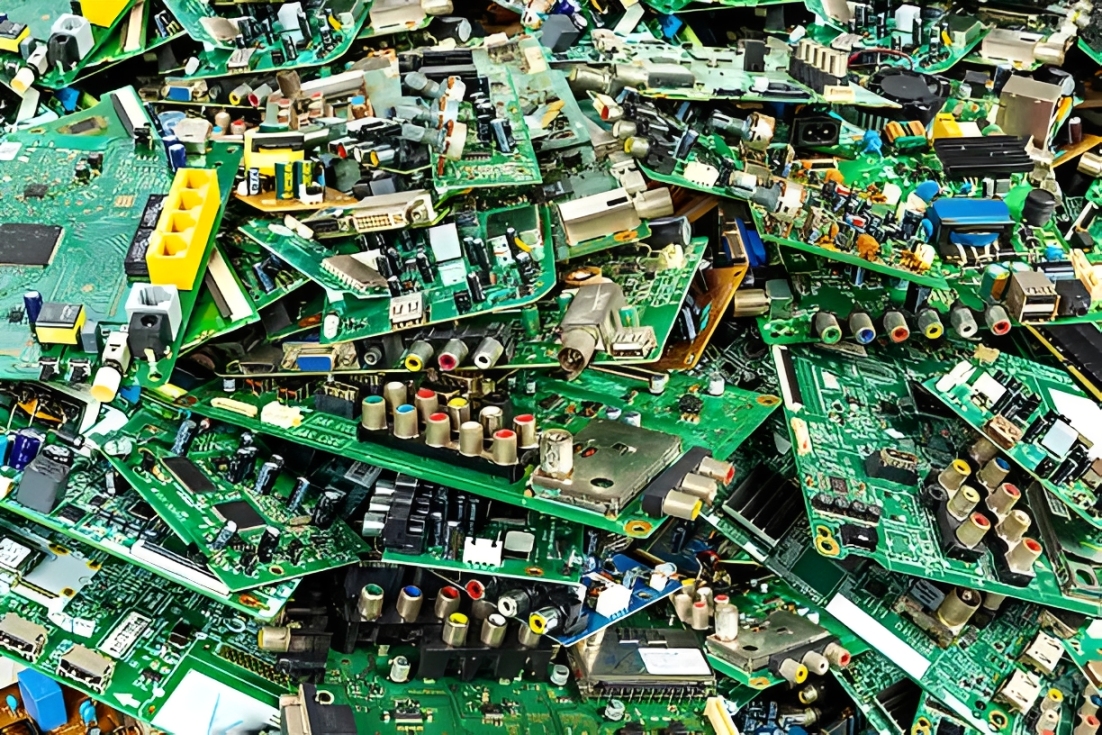
- Peripheral and Ancillary Components: Power supply units, printed circuit boards (PCBs), motherboards, specialized cabling, and commercial battery packs.
Recognizing the full scope of electronic waste ensures that IT and facilities managers account for all decommissioned assets during hardware refresh cycles, office relocations, or asset inventory audits.
The Legal, Compliant Process for E-Waste Recycling in Dubai
To ensure complete legal compliance when clearing out outdated technology, organizations should implement a structured, auditable disposal workflow:
- Inventory and Classify Assets: Catalog every decommissioned device by serial number, asset tag, and category. Identify all equipment containing data-bearing storage media that requires verified data destruction.
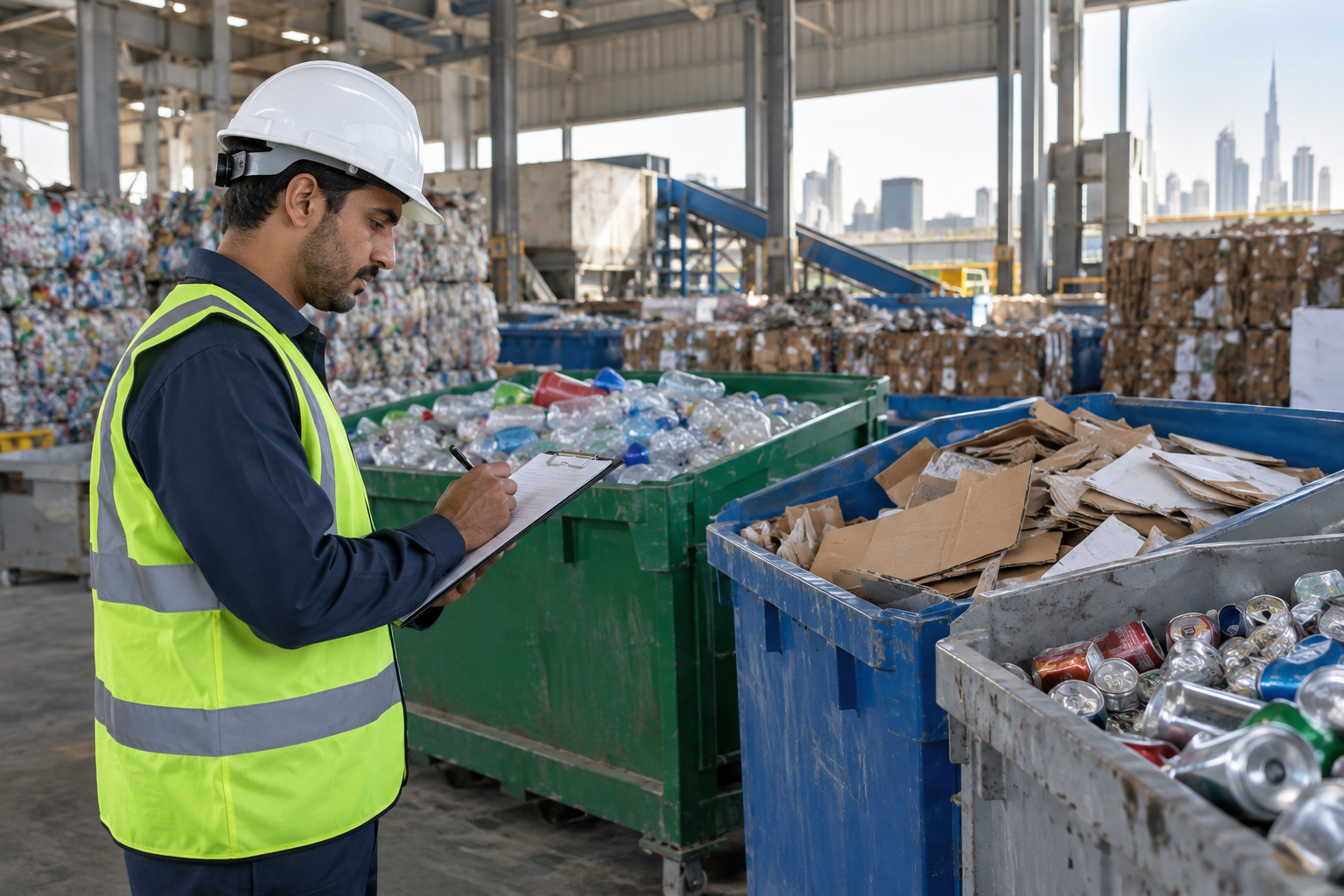
- Engage a Dubai Municipality-Approved Recycler: Commercial entities must never hand over electronic scrap to unauthorized collectors or informal scrap dealers. Always partner with a licensed, Dubai Municipality-approved recycling company authorized to handle commercial and electronic waste streams.
- Mandate Certified Data Destruction: Ensure your recycling provider executes secure data destruction — such as high-grade physical shredding or degaussing — on all hard drives and storage media prior to downstream processing.
- Maintain Custody and Safe Logistics: Schedule authorized, secure collection and transport from your business premises to the processing facility to maintain a documented chain of custody.
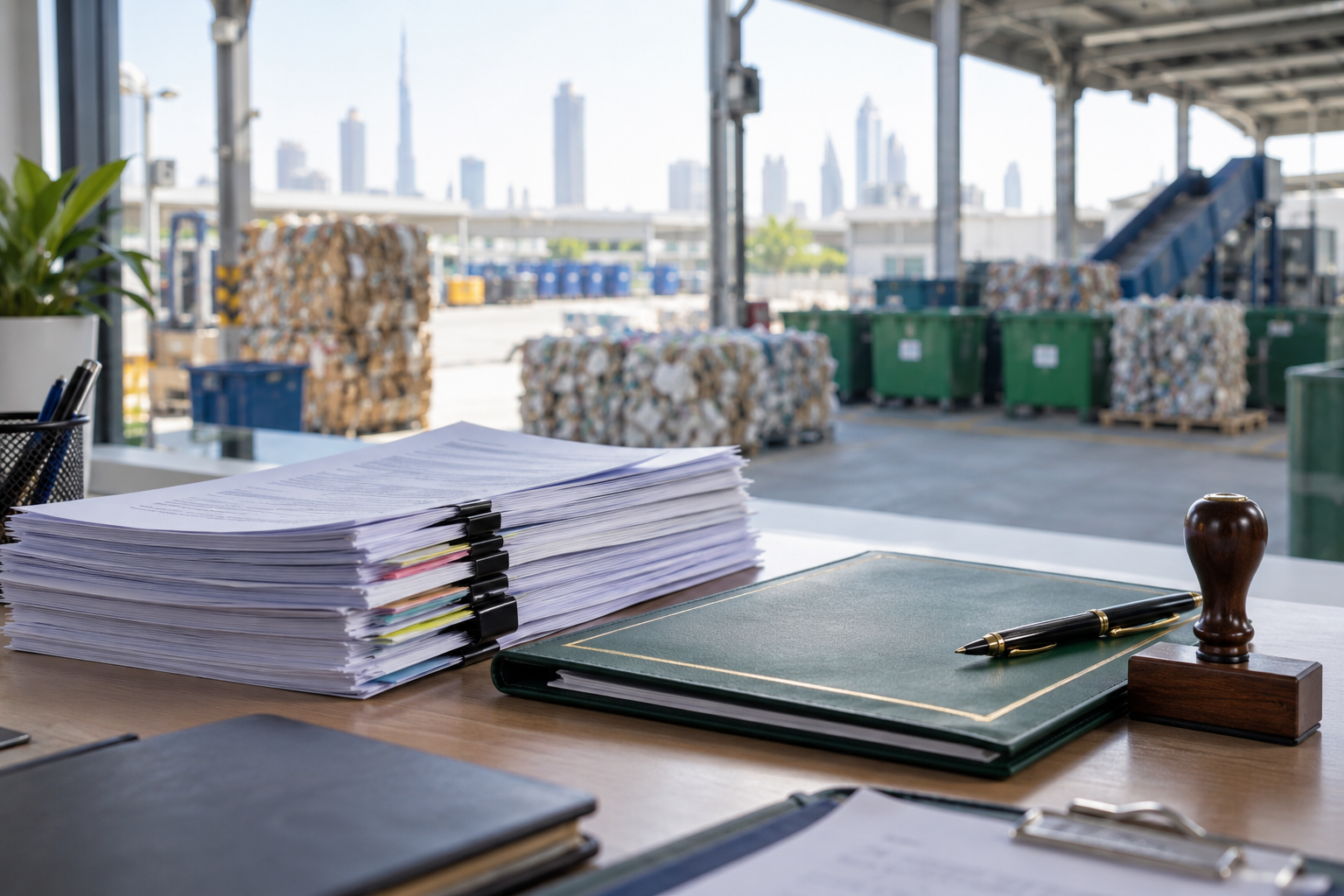
- Obtain Official Disposal Certificates: Following processing, request formal documentation, including a Certificate of Destruction and a Certificate of Recycling. These records serve as legal verification of compliance for internal audits, environmental authorities, and corporate governance requirements.
What Happens to E-Waste After Collection?
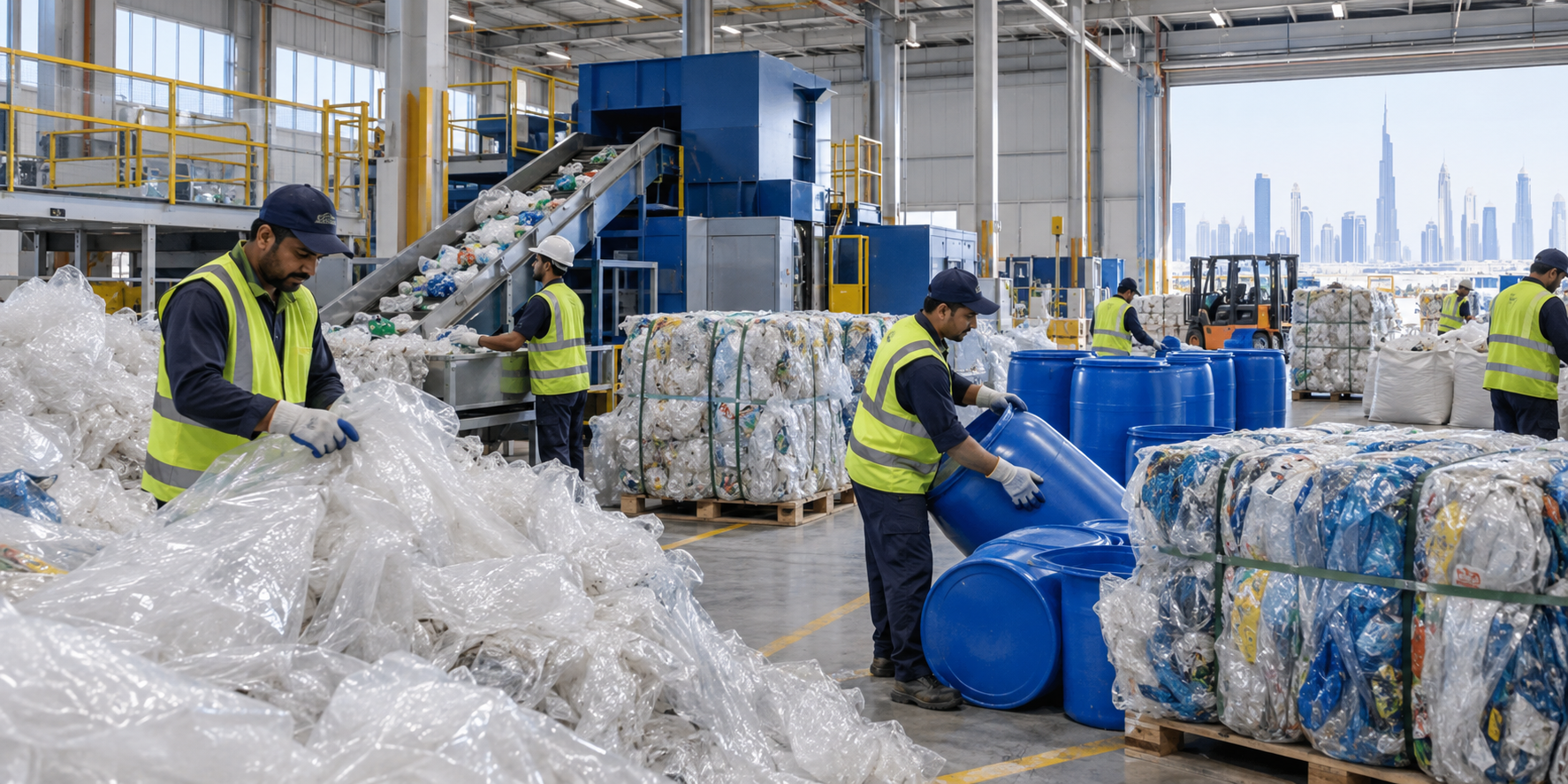
Once collected and transported to a specialized facility, electronic waste undergoes a systematic, multi-stage recovery process. Qualified technicians first manually dismantle the equipment, separating hazardous components — such as lithium-ion batteries, mercury-containing backlight tubes, and capacitors — to ensure safe downstream handling.
The remaining equipment is processed through mechanical sorting and material separation systems. Plastics, ferrous metals, non-ferrous metals (such as copper and aluminum), and glass are segregated into clean, categorized material streams. Printed circuit boards and electronic components are processed to recover base metals and trace precious elements, which are subsequently channeled back into manufacturing supply chains. By converting obsolete hardware into reusable raw materials, the recycling process conserves natural resources, reduces carbon footprints, and helps divert hazardous waste from landfills.
Why Work With a Certified Recycler?
Partnering with an authorized recycling service gives organizations verifiable peace of mind and operational clarity. A licensed provider operates under municipal regulatory oversight, adhering strictly to health, safety, environmental, and material-handling protocols.
For facilities managers, IT directors, and business owners, the primary benefit lies in accountability. An experienced, certified recycling partner delivers itemized asset reports, a transparent chain of custody, and auditable certification confirming that all materials were handled in accordance with UAE environmental standards. This documentation provides critical verification during corporate audits, Environmental, Social, and Governance (ESG) reviews, and regulatory inspections.
Partner With Ecocleaner for Compliant E-Waste Management
Maintaining data security and meeting municipal environmental standards requires an established, reliable recycling partner. Based in Dubai Industrial City, Ecocleaner Recycling LLC is a Dubai Municipality-approved recycling and secure destruction company dedicated to helping organizations manage compliant e-waste recycling in Dubai. Whether your business is undergoing a complete IT infrastructure upgrade, clearing out server rooms, or retiring routine office equipment, contact our team today to arrange certified collection and secure disposal services.